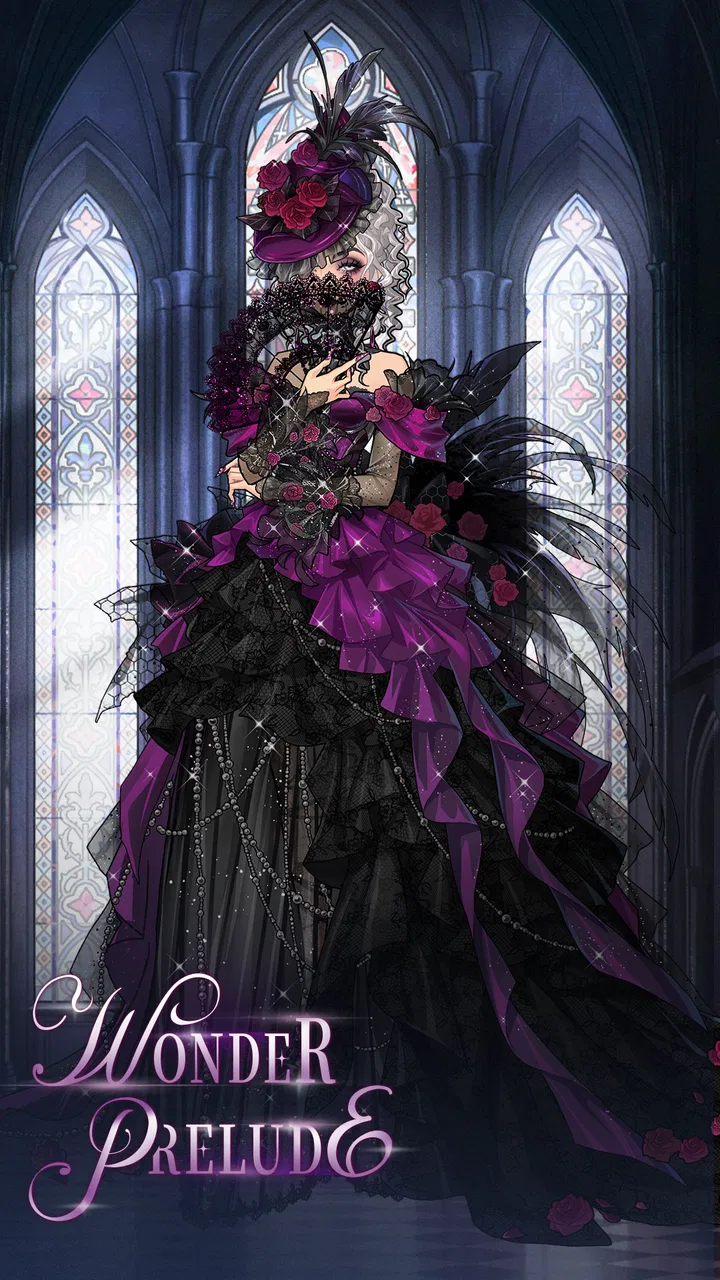
SuitU: Fashion Avatar Dress Up
- 4.1
- Rating
- 5.00M
- Installs
- Free
- Price

 Analysis by App-foxy
I approached SuitU: Fashion Avatar Dress Up as a role-playing game built around personal style rather than combat or exploration. Its central appeal is easy to understand: you create looks, experiment with clothing, and try to make fashion choices that feel right for the situation. After spending time with it, I found that the enjoyment comes less from rushing through a conventional story and more from making small visual decisions, comparing combinations, and gradually developing a sense of what works together.
That makes it a particularly comfortable choice for short sessions. I can open it when I have a few quiet minutes, adjust an outfit, and stop without needing to remember a complicated plot. At the same time, it is not simply a passive dress-up toy. The role-playing format gives the styling activity a little more purpose, while the large amount of visual choice can make the game surprisingly absorbing. My main advice is to approach it as a fashion-focused creative game, not as a traditional adventure with deep combat, exploration, or fast action.
What the fashion-focused gameplay feels like
The first thing I noticed is how much the experience depends on visual judgment. A single item can change the mood of an outfit, and a look that seems attractive on its own may not work once combined with the rest of the avatar’s clothing. I found myself paying attention to balance, color, shape, and whether the pieces appeared to belong to the same overall style. That process is the real game loop, and it works best when I treat each outfit as a small design problem rather than simply choosing the most eye-catching item.
You May Also Like

 Blood Strike: 2.5 Anniversary
Blood Strike’s Loadouts Turn Every Drop Into a Tactical Gamble
A close look at Blood Strike’s custom loadouts: how fast access to signature weapons reshapes its battle royale rhythm, rewards preparation, and narrows the gap between fights.

 Pandora - Music & Podcasts
Pandora’s Music Is Easy to Start, but Harder to Recover
Pandora’s strength is its low-effort path from a seed to a station. Its weak spot is how much confidence it asks you to place in connection, setup, and quiet recovery.

 8 Ball Pool
 Is Built on Rivalries, Rematches, and Routine
A close look at the rivalries, rematches, shared routines, and unanswered safety questions that turn a quick pool match into a persistent mobile community.

 Samsung Music
’s Quiet Strength Is Playing What You Already Own
Its reach comes less from spectacle than from dependable access to a personal library. That simplicity is both the app’s strongest retention engine and its ceiling.

 AccuWeather: Weather Radar
AccuWeather Review: A Quick, Clear Forecast for Everyday Decisions
For everyday plans, the best forecast is the one you can understand quickly. AccuWeather makes rain timing, radar, and local conditions easy to act on, with a few trade-offs.

 Hill Climb Racing
Why Hill Climb Racing Still Turns Crashes Into One More Run
A tiny car, a bumpy hill and one more upgrade: Hill Climb Racing keeps resurfacing because its simple chaos makes every near-miss feel personal.
More From Our News Desk



This is where the role-playing label makes sense. The game gives fashion choices a context, so I am not only dressing an avatar for my own amusement. I am also thinking about what kind of appearance suits the current situation. That extra layer makes the decisions more interesting than scrolling through a wardrobe with no goal. It also means that players who enjoy matching themes and refining details will probably get more from it than people who want immediate rewards or constant action.
I especially like that the game leaves room for personal taste. I can aim for something elegant, playful, dramatic, casual, or deliberately unusual instead of following one fixed idea of what looks good. That freedom is useful for younger players and for anyone who enjoys visual creativity without needing drawing skills. The age rating of Everyone 10+ also places it in a family-friendly space, although parents should still remember that optional purchases are part of the experience.
The game is free to start, which makes trying it straightforward. Libii HK Limited is the developer, and the current version is 3.3.0. It runs on Android 6.0 or later, so people using an older device should check compatibility before spending time troubleshooting an installation that the phone cannot support. The game has reached over five million installs and holds a 4.3 average from around forty-three thousand ratings, with roughly two thousand written reviews. Those figures suggest a substantial audience, but they do not remove the need to decide whether its particular style of play suits you.
The first friction points I would expect
The most common difficulty is likely to be decision overload. A fashion game can look simple until the wardrobe starts presenting many possible combinations. I sometimes spent more time comparing small differences than actually enjoying the finished look. My practical solution is to choose one anchor item first, such as a dress, top, or distinctive accessory, and build around it. Starting with everything at once makes it harder to see why an outfit feels unbalanced.
Another sticking point is the difference between an item that looks impressive in isolation and one that improves the complete outfit. Bright colors, elaborate accessories, and unusual silhouettes naturally attract attention, but several attention-grabbing pieces can compete with each other. I get better results when I allow one element to lead and use simpler pieces to support it. This is a small habit, but it turns the wardrobe from a source of hesitation into a set of usable tools.
Players may also feel frustrated when a preferred look does not perform as well as expected in a themed situation. That does not necessarily mean the game is malfunctioning. Fashion evaluation often rewards coherence with the requested style, not just personal taste. When this happens, I would first revisit the theme and remove pieces that contradict it before assuming that progress is blocked. A polished outfit can still miss the intended direction if its individual parts send different signals.
There is also a psychological trap in games like this: the feeling that I need to unlock or buy something before I can create a good look. I found it more useful to work with what is already available and learn how the pieces interact. A new item can expand options, but it cannot automatically fix weak coordination. If the game begins to feel like a shopping exercise rather than a creative one, taking a break and returning with a specific outfit idea helps restore the fun.
Getting started without creating avoidable problems
Because the game is free with in-app purchases ranging from $0.49 to $99.99 per item, I would make purchase boundaries clear before handing the device to a child. The safest approach is to treat paid items as optional additions, not as a requirement for understanding the basic gameplay. I also recommend checking the device’s purchase controls and account settings in advance. That is a general setup step, but it matters here because the attraction of new fashion items is central to the experience.
On Android, the minimum operating-system requirement is Android 6.0. If installation fails, the first checks should be the system version, available storage, and whether the device has a stable connection. I would also restart the device and try the official app store again rather than relying on an unfamiliar download source. These simple checks solve more problems than repeatedly tapping an install button, and they avoid introducing unnecessary security risks.
If the game opens but behaves slowly, I would close other demanding apps, restart the phone, and make sure the operating system is not waiting for a major update. A fashion game still has to load visual assets, so an older or crowded device may struggle even when it technically meets the minimum requirement. Lowering general device load is a sensible first step. I would not immediately conclude that the game itself is broken.
For a new player, the best setup is a short, focused first session. I would explore the basic wardrobe, create one complete outfit, and learn how the game presents its fashion tasks before trying to optimize every detail. This prevents a common mistake: spending resources or making purchases before understanding what kind of styling decisions the game actually encourages. It also gives a clearer sense of whether the visual presentation is comfortable to use on the phone’s screen.
How I recover when an outfit or session goes wrong
When a look fails to feel convincing, I use a simple reset workflow. First, I remove the accessories rather than replacing everything. Accessories often create the strongest visual conflict, and taking them away reveals whether the basic clothing already works. Next, I choose one color family or one clear style direction. Only after that do I add a final detail. This process is quicker than rebuilding the entire avatar every time something feels off.
I also avoid changing several categories at once. If I replace the top, bottom, shoes, hair, and accessories together, I cannot tell which decision improved the outfit. Changing one layer at a time gives me useful feedback and makes the game feel more like a creative experiment. This is one of the less obvious strengths of the format: it can quietly teach visual editing and comparison, even though it is presented as entertainment.
If progress seems not to register, I would first check whether the action has fully completed and whether the connection is stable. Then I would close and reopen the game, allowing the device a moment to finish background activity. I would avoid repeatedly submitting the same action while the screen appears unresponsive, since that can make it harder to know what actually happened. A clean restart is usually a better recovery step than frantic tapping.
For a session interrupted by a crash or a frozen screen, I would record what I was doing in broad terms before reopening: whether I was changing an item, moving between screens, or trying to complete a task. That makes it easier to see whether the problem is repeatable. If the issue happens only once, it may have been a temporary device or connection hiccup. If it returns during the same action, updating the app and checking the device’s available space are sensible next steps.
I would be cautious about uninstalling immediately. Removing a game can affect locally stored progress, depending on how that particular installation handles saved information. Since I do not want to lose a carefully built wardrobe or completed progress, I would try restarting, updating, and checking the account or device situation first. Reinstallation is a last resort, not the first troubleshooting button I press.
Separating game trouble from device trouble
Not every delay comes from SuitU. If other apps are also slow, the phone may be short on storage or memory. If only online functions are affected, the connection may be the more likely cause. I find it helpful to compare behavior: does the game fail at one specific screen, or does the whole device feel sluggish? That distinction prevents wasted time and gives a clearer picture before changing settings or reinstalling anything.
Battery-saving modes can also affect how comfortably a visual game runs, especially on an older phone. I would check whether the device is heavily restricting background activity or closing apps aggressively. I would not disable safety features casually, but I would make sure the game is not being interrupted by a general power-management setting. Keeping the phone cool and closing unnecessary apps can be more useful than searching for a hidden in-game fix.
Connection problems deserve a similar test. If the game is loading slowly, I would try a different reliable network and see whether the behavior changes. A brief interruption can look like a failed game action, particularly when a screen depends on content loading before it can respond. I would avoid assuming that a missing image or delayed transition means my account or outfit has been damaged.
There is another source of confusion: expectations. Someone coming from a competitive role-playing game may expect constant progression, battles, or a large narrative. SuitU is better understood as a fashion-centered experience where the satisfaction comes from styling and refinement. If that core activity feels repetitive after several sessions, no amount of troubleshooting will change the genre. In that case, a story-heavy role-playing game or an action-focused alternative would be a better use of time.
Who will enjoy it, and who should skip it
I would recommend it to players who enjoy avatars, outfit planning, color coordination, and creative challenges with a relaxed pace. It is also a good fit for someone who wants a game that can be played in short bursts without demanding fast reflexes. A teenager choosing an outfit for a themed challenge, a parent looking for a gentler game for an older child, or an adult who enjoys digital fashion can all find a natural entry point.
One realistic everyday use is a short evening session after work or school. I might open the game while waiting for dinner, choose a central clothing piece, test two different styles, and finish by saving the version that feels most coherent. That kind of session has a clear beginning and end. It does not require me to commit to a long campaign, and the creative decision-making is enough to feel engaging without becoming mentally exhausting.
I would be more hesitant to recommend it to players who dislike cosmetic unlocks or feel pressured by optional spending. Even when purchases are not necessary for casual enjoyment, seeing desirable items can change the mood of the game. The broad purchase range means families should set expectations early. Players who want a completely offline experience, deep character statistics, or action mechanics should also look elsewhere, because those are not the reasons I would choose this title.
Compared with a conventional role-playing game, this one trades combat and exploration for visual expression. Compared with a simple avatar editor, it adds more direction and purpose to the act of dressing. That middle position is its strongest point. It gives styling enough structure to remain interesting, while keeping the controls approachable. The trade-off is that players who need a dramatic plot or constantly changing mechanics may eventually find the loop narrow.
My practical verdict
After using it, I see SuitU as a pleasant fashion role-playing game with a clear audience and a manageable learning curve. Its best moments come when I stop chasing the most elaborate item and start thinking about the whole outfit. The game rewards patience, comparison, and a willingness to revise a look. That makes it more thoughtful than the short summary might suggest, even though its basic idea is immediately accessible.
I would install it if I wanted a free creative game for short sessions and enjoyed making style choices. I would also feel comfortable recommending it to someone who likes avatar customization but does not want the pressure of action gameplay. Before installing, I would confirm Android 6.0 compatibility, check available storage, and set purchase controls if a child will be playing. Those steps remove much of the avoidable friction.
My final reservation is that the experience can become less satisfying if every new outfit starts to feel like a reason to spend money. I get the most value when I treat purchases as optional and focus on improving combinations with what I already have. The strongest reason to try this game is not collecting everything; it is learning how to make a limited set of choices look intentional. For that specific kind of relaxed, fashion-led play, it is an enjoyable recommendation. For players seeking a deeper adventure, competitive action, or a story that carries the experience, another role-playing game will be a better match.
FAQs for SuitU: Fashion Avatar Dress Up
01What is SuitU: Fashion Avatar Dress Up?
SuitU: Fashion Avatar Dress Up is a creative mobile application that allows users to design and style virtual avatars. With a wide range of fashion items, hairstyles, and accessories, users can customize their avatars to reflect personal style or explore new fashion trends. This app is perfect for fashion enthusiasts and those interested in digital design.
02Is SuitU free to download and use?
SuitU is available for free download on both Android and iOS devices. While the app offers extensive free features, there are optional in-app purchases for premium items and exclusive collections. These purchases enhance the customization experience, allowing users to access a broader selection of fashion items and exclusive content.
03What age group is SuitU suitable for?
SuitU is designed for a wide audience, appealing particularly to fashion lovers and creative individuals. It is suitable for users aged 12 and above due to its emphasis on fashion and design. The intuitive interface makes it accessible for younger users while offering enough depth to keep older users engaged.
04Does SuitU require an internet connection to function?
An internet connection is required to download new fashion items, updates, and access certain features like community sharing. However, many aspects of avatar creation and customization are available offline. This makes it convenient for users who want to design on the go without needing continuous connectivity.
05Are there social features in SuitU?
Yes, SuitU includes social features that allow users to share their avatar creations with friends or the wider community. Users can participate in fashion challenges, showcase their style, and get inspired by others. This interactive element enriches the user experience, fostering a vibrant community of fashion enthusiasts.
Pros
- Wide variety of fashion items.
- User-friendly interface.
- Regular updates with new content.
- In-depth customization options.
- Interactive social features.
Cons
- In-app purchases can be pricey.
- Requires a stable internet connection.
- Occasional app crashes.
- Limited offline functionality.
- Ads can be intrusive.

SuitU: Fashion Avatar Dress Up
Gallery